
Key Formulas You Need to Memorize for CFA Quantitative Methods
Quantitative Methods is one of the most important and challenging sections of the CFA exam, and knowing the key formulas is essential to perform well. This section involves a variety of statistical tools that are used to assess risk, calculate returns, and understand financial data patterns. Understanding and memorizing key formulas in Quantitative Methods will help you navigate this section effectively and improve your chances of passing the exam.
In this article, we’ll highlight the most important formulas you need to memorize for the CFA Quantitative Methods section, break them down for easy understanding, and provide tips for applying them during the exam.
1. Time Value of Money (TVM) Formulas
Time value of money is a fundamental concept in finance and plays a critical role in the CFA exam. These formulas help you understand how money grows over time due to interest or how to calculate present or future values.
Future Value (FV) of a Single Sum

Where:
FV = Future Value
PV = Present Value
r = Interest rate per period
n = Number of periods
Present Value (PV) of a Single Sum
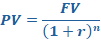
Where:
PV = Present Value
FV = Future Value
r = Interest rate per period
n = Number of periods
Future Value (FV) of an Annuity
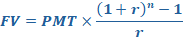
Where:
PMT = Payment amount
r = Interest rate per period
n = Number of periods
Present Value (PV) of an Annuity
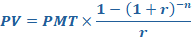
Where:
PMT = Payment amount
r = Interest rate per period
n = Number of periods
2. Probability Formulas
Probability is a key topic in Quantitative Methods, especially for understanding risk and return in investment strategies.
Addition Rule (For Mutually Exclusive Events)

Where:
P (A ∪ B) = Probability of either event A or event B occurring
P (A) = Probability of event A occurring
P (B) = Probability of event B occurring
Multiplication Rule (For Independent Events)

Where:
P (A ∩ B) = Probability of both events A and B occurring
P (A) = Probability of event A occurring
P (B) = Probability of event B occurring
Conditional Probability
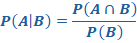
Where:
P (A|B) = Probability of event A occurring given event B has occurred
P (A ∩ B) = Probability of both events A and B occurring
P (B) = Probability of event B occurring
3. Descriptive Statistics Formulas
Descriptive statistics are used to summarize and describe the important features of data sets.
Mean (Arithmetic Average)

Where:



Variance
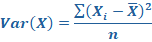
Where:



n = Number of observations
Standard Deviation

Where:
SD (X) = Standard Deviation
Var (X) = Variance
4. Probability Distributions Formulas
These formulas help you understand how data is distributed across different scenarios and are crucial for calculating probabilities in the CFA exam.
Normal Distribution Z-Score

Where:
Z = Z-score
X = Value of the random variable
= Mean of the distribution
= Standard deviation of the distribution
Standard Normal Distribution

Where:
Z = Z-score
This formula gives the probability associated with a standard normal distribution.
5. Hypothesis Testing Formulas
Hypothesis testing is a key element in CFA Quantitative Methods, especially for interpreting test statistics and making decisions based on sample data.
Z-Test Formula

Where:
Z = Z-statistic
X = Sample mean
μ = Population mean
σ = Population standard deviation
n = Sample size
T-Test Formula

Where:
T = T-statistic
X = Sample mean
μ = Population mean
s = Sample standard deviation
n = Sample size
6. Regression Analysis Formulas
Regression analysis helps to understand the relationship between dependent and independent variables. These formulas are essential for interpreting financial models in the CFA exam.
Simple Linear Regression Equation

Where:
Y = Dependent variable
X = Independent variable
α = Intercept
β = Slope coefficient
ϵ = Error term
Coefficient of Determination (R-squared)
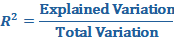
Where:
R² = Proportion of variance explained by the model
Explained Variation = The variance explained by the independent variable(s)
Total Variation = The total variance in the dependent variable
7. Sampling and Estimation Formulas
Sampling and estimation methods help you make inferences about populations from sample data, which is key for analyzing large datasets in finance.
Standard Error of the Mean (SEM)

Where:
SEM = Standard error of the mean
σ = Population standard deviation
n = Sample size
Confidence Interval Formula

Where:
= Sample mean
Z = Z-score based on the confidence level (e.g., 1.96 for 95% confidence)
σ = Population standard deviation
n = Sample size
Tips for Memorizing Key Formulas
- Understand the Concepts: Instead of memorizing formulas without understanding, try to grasp the underlying concepts. This will make it easier to apply them when needed.
- Use Flashcards: Create flashcards for each formula and practice frequently.
- Practice Problems: Work through a variety of practice problems to understand how and when to apply each formula.
- Group Similar Formulas: Group related formulas, such as time value of money formulas or hypothesis testing formulas, to help memorize them more easily.
- Focus on the High-Yield Formulas: Certain formulas are tested more frequently on the CFA exam. Make sure you prioritize these in your study routine.
Mastering the key formulas for CFA Quantitative Methods is crucial for success in the exam. By familiarizing yourself with the formulas, understanding the underlying concepts, and practicing regularly, you’ll be well-prepared to tackle this section.
Make sure to stay organized and commit these formulas to memory so you can quickly recall and apply them during the exam. Good luck with your CFA preparation!